
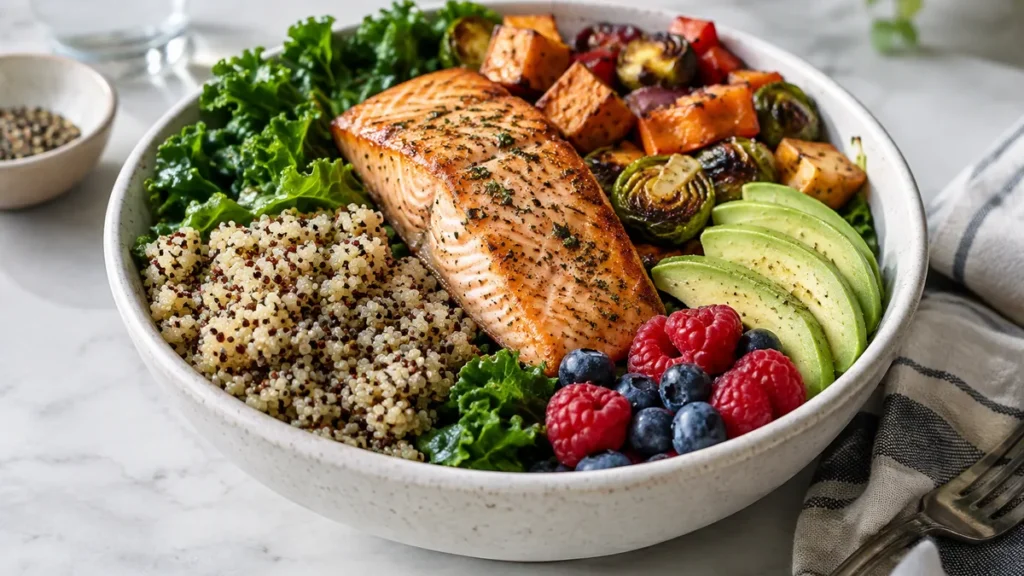
Better energy and long-term health rarely come from one “perfect” food. They are built from repeatable choices: balanced meals, enough protein and fiber, nourishing fats, regular hydration, and a realistic approach to added sugar. The goal is not to eat perfectly every day. It is to make the healthier choice easier most of the time.
These 15 smart nutrition tips are written for busy adults and families in the United States. They focus on practical meals, affordable shopping, and small changes you can use at home, at work, or on the go. Nutrition needs vary, so use this guide as general education rather than a personal treatment plan.
What a Balanced Eating Pattern Looks Like
The USDA’s MyPlate guidance offers a simple visual framework: include fruits and vegetables, grains, protein foods, and dairy or fortified alternatives across your day. A balanced plate does not need to look identical at every meal. It can be a bowl, sandwich, soup, snack plate, or leftovers.
For many meals, start with a protein source, add a high-fiber carbohydrate, include produce, and finish with a source of unsaturated fat when appropriate. This structure supports variety without requiring calorie counting or restrictive rules.
15 Smart Nutrition Tips
1. Build meals around a simple plate formula
Make about half the plate vegetables or fruit, add a quarter of protein, and fill the remaining quarter with whole grains or another satisfying carbohydrate. For example, pair roasted broccoli and berries with grilled chicken and brown rice. Portions can change based on hunger, activity, medical needs, and personal goals.
2. Include protein at each main meal
Protein foods include eggs, fish, poultry, lean meats, beans, lentils, tofu, tempeh, Greek yogurt, cottage cheese, nuts, and seeds. Adding protein to breakfast can make a meal more satisfying than a pastry or sweetened drink alone. Try eggs with whole-grain toast, yogurt with fruit, or beans with avocado on a corn tortilla.
3. Increase fiber gradually
Fiber-rich foods include beans, lentils, vegetables, fruit, oats, barley, whole-grain bread, nuts, and seeds. Add fiber slowly and drink fluids regularly, because a sudden increase can cause digestive discomfort. Mix beans into chili, add berries to breakfast, or choose air-popped popcorn instead of a highly sweetened snack.
4. Choose whole grains more often
Whole grains retain more of the grain than refined grains. Look for oats, brown rice, quinoa, barley, bulgur, whole-wheat pasta, and bread labeled with whole grain as a leading ingredient. A practical swap is a whole-wheat tortilla for a refined wrap or oatmeal for a sugary breakfast bar.
5. Add healthy fats for flavor and satisfaction
Unsaturated fats are found in foods such as avocado, olive oil, nuts, seeds, and many fish. Use olive oil in a simple dressing, add walnuts to oatmeal, or place avocado on a bean bowl. Healthy fats are nutrient-dense, so a small amount can add flavor without making a meal complicated.
6. Make water the default drink
Water is a practical everyday choice for hydration. Carry a refillable bottle, drink with meals, and keep water visible at your desk or in the car. The CDC’s water and healthier-drinks guidance explains why replacing sugary drinks with water can be a useful step. Hydration needs vary with climate, activity, illness, pregnancy, and medications.
7. Limit added sugars without banning every sweet food
Added sugar can appear in soda, sweetened coffee, energy drinks, desserts, sauces, cereals, and snack bars. Start by comparing labels and replacing one sweetened drink per day with water, unsweetened tea, or sparkling water. Enjoying dessert occasionally can fit into a balanced pattern; the focus is reducing routine excess, not creating guilt.
8. Pair carbohydrates with protein or fiber
Carbohydrates can be part of a healthy diet, especially when paired with protein, fiber, or both. Instead of eating crackers alone, add hummus. Pair a banana with peanut butter, or add beans to rice. These combinations can make snacks and meals more satisfying and practical.
9. Eat a colorful variety of produce
Different fruits and vegetables provide different nutrients and flavors. Build variety with fresh, frozen, canned, and dried options. Frozen vegetables can be just as practical as fresh, while canned beans and tomatoes can save time. Choose canned produce with less added sodium or rinse it when appropriate.
10. Use smart convenience foods
Convenience does not have to mean highly processed. Keep ready-to-eat options such as frozen vegetables, canned tuna or beans, prewashed salad greens, microwaveable brown rice, plain yogurt, hard-boiled eggs, and rotisserie chicken available. Combine two or three of these with fresh produce for a quick meal.
11. Read the Nutrition Facts label strategically
Start with serving size, then check protein, fiber, saturated fat, sodium, and added sugars. Compare similar products instead of searching for a single “perfect” label. Ingredients matter too: a short ingredient list is not automatically better, but recognizable foods can make choices easier.
12. Plan one protein and two produce options before shopping
A short plan prevents decision fatigue. Choose one protein, one whole-grain or starchy food, and two fruits or vegetables. For example: chicken, oats, spinach, and apples. Add beans or lentils for an affordable plant-based option, and use the combination across several meals.
13. Prepare food in small batches
Batch cooking does not require spending all Sunday in the kitchen. Cook one grain, roast one tray of vegetables, and prepare one protein. Store portions safely and combine them differently during the week. Rice and vegetables can become a bowl, while the same chicken can fill a salad or whole-grain wrap.
14. Slow down enough to notice hunger and fullness
Eat without rushing when possible, put the fork down occasionally, and check whether you are still hungry before taking more. Hunger can also be affected by sleep, stress, medication, and activity. This is not a requirement to eat less; it is a way to notice what your body is communicating.
15. Make the next meal better, not the entire week perfect
A restaurant meal, missed breakfast, or sweet snack does not erase your progress. At the next meal, add a vegetable, drink water, include protein, or choose a whole grain. Sustainable nutrition is built through the next helpful decision, not through all-or-nothing rules.
One-Day Sample Menu
This menu demonstrates how protein, fiber, whole grains, produce, healthy fats, and hydration can fit together. It is an example, not a prescription.
| Time | Example meal | What it provides |
|---|---|---|
| Breakfast | Plain Greek yogurt with oats, berries, chia seeds, and walnuts | Protein, fiber, fruit, and unsaturated fat |
| Lunch | Whole-grain chicken and vegetable wrap with a side salad | Protein, whole grains, vegetables, and hydration from water |
| Snack | Apple with peanut butter, or carrots with hummus | Produce paired with protein, fiber, or healthy fat |
| Dinner | Salmon, quinoa, roasted vegetables, and avocado | Protein, whole grain, colorful produce, and unsaturated fat |
| Evening option | Fruit, milk, or an unsweetened fortified alternative if hungry | A simple option matched to personal needs |
Adjust this menu for allergies, cultural foods, budget, vegetarian or vegan preferences, medical conditions, and appetite. A registered dietitian can help tailor a plan when nutrition is part of medical care.
Smart Grocery Shopping Advice
Shop the perimeter, then use the center aisles wisely
Fresh produce, dairy, eggs, seafood, and meat may be around the perimeter, but nutritious foods are also in the center aisles: oats, beans, lentils, canned fish, whole-grain pasta, nuts, seeds, and frozen vegetables. Use the store layout as a tool, not a rule.
Keep a short repeatable list
- Produce: leafy greens, carrots, peppers, apples, bananas, frozen berries.
- Protein: eggs, beans, lentils, yogurt, tofu, fish, chicken, nuts.
- Whole grains: oats, brown rice, quinoa, whole-wheat bread, barley.
- Flavor: olive oil, herbs, garlic, salsa, lemon, vinegar, and low-sodium spices.
- Hydration: water, unsweetened tea, or plain sparkling water.
Shop for the week you actually have
If your week is busy, buy fewer fresh items and add frozen or shelf-stable choices. Wasted food is not a sign that you failed; it may mean your plan did not match your schedule. Buy smaller quantities, freeze extras, and keep quick meals available.
Nutrition and Better Energy
Energy levels are influenced by sleep, stress, movement, hydration, medications, and health conditions as well as food. A balanced meal may help you avoid the cycle of skipping meals and then becoming extremely hungry, but nutrition cannot explain every cause of fatigue.
If tiredness is persistent, severe, new, or accompanied by symptoms such as unexplained weight change, shortness of breath, fainting, bleeding, mood changes, or sleep problems, speak with a qualified healthcare professional. Do not use supplements as a substitute for evaluation.
Frequently Asked Questions
What is the healthiest meal to eat for energy?
There is no single best meal for everyone. A useful starting point is protein plus a high-fiber carbohydrate, produce, and water. For example, eggs with whole-grain toast and fruit, or beans with brown rice and vegetables.
How much protein should I eat?
Protein needs depend on age, body size, activity, pregnancy, health conditions, and goals. Spread protein foods across meals and ask a clinician or registered dietitian for a personalized amount, especially if you have kidney disease or another condition affected by protein.
Are carbohydrates bad for you?
No. Carbohydrates are found in fruit, vegetables, beans, grains, and dairy as well as sweets. Choose fiber-rich sources more often, pair them with protein or healthy fats, and match portions to your needs.
Should I avoid all added sugar?
Most people can focus on limiting routine sources such as sugary drinks, sweetened coffee, and frequent desserts rather than trying to eliminate every sweet food. Read labels and make water or unsweetened drinks the default.
Do I need supplements for better health?
Not necessarily. Supplements may be useful for specific deficiencies, life stages, dietary patterns, or medical conditions, but they can interact with medicines and are not risk-free. Ask a healthcare professional before starting a supplement regimen.
Conclusion
Smart nutrition is less about chasing a perfect diet and more about creating meals you can repeat. Build plates with variety, include protein and fiber, choose whole grains, use healthy fats, drink water, limit added sugars, and keep convenient ingredients available. Start with two tips this week, then add another when the first feels routine.
For more HealthyGlob guidance, explore the daily health habits guide, natural weight-management strategies, gut-health article, and adult BMI Calculator. BMI is a screening measure, not a diagnosis.
Nutrition disclaimer: This article is for general educational purposes only and is not medical advice, diagnosis, or treatment. Nutrition needs differ based on age, health history, medications, allergies, pregnancy, eating-disorder history, and other factors. Consult a qualified healthcare professional or registered dietitian for individualized guidance.
References: USDA MyPlate, CDC water and healthier drinks, CDC healthy eating guidance, and NIH Office of Dietary Supplements dietary fiber fact sheet.